Methodology · August 13, 2026
AI readiness is not data quality.
By the MortarIQ Founder · 5 minute read
“Our data quality is fine” is the most common objection to running a readiness assessment, and it is usually true. That is what makes it interesting. The warehouses that stall AI projects are very often warehouses with good data quality, because the two things measure different layers, and the layer that fails first is the one most teams have never scored.
Data quality asks: are the values correct? No unexpected nulls, no duplicates, amounts in range, totals that reconcile. It is a property of the rows, verifying it requires reading the rows, and a mature toolchain owns it: dbt tests, Great Expectations, observability platforms watching for anomalies.
AI readiness asks: can a consumer that was never in the room use this? Can something with no tribal knowledge find the right table among four candidates, understand what status means, know how fresh the data is supposed to be, join it correctly, and do all of that without ingesting the unmasked personal data in staging? That is a property of structure and governance: descriptions, timestamps, declared keys, tags, masking policies. It lives in metadata, which is why it is measurable without reading a row.
Why good teams have exactly this gap
The divergence is not random; it is produced by competence. A careful data team keeps values right because wrong values page someone. But the same team carries the context in its heads: everyone knows orders_v2 is the real one, everyone knows status = 3means churned, everyone knows the finance mart lags a day. The values are immaculate and the warehouse is tribal. Every quality check passes, because quality checks encode the team’s knowledge. Nothing in the building can pass the other test, because the other test is precisely “what happens without the team’s knowledge.”
Human consumers rarely expose this, because human consumers can ask. The new analyst interrupts someone’s lunch, learns about orders_v2, and the tribal system works. An AI workload is the first consumer that does not ask. It reads the catalog, takes the metadata at face value, joins on the column names, and ingests whatever its role can see. It is, in effect, an audit of everything your team knows but never wrote down, run at scale, in production.
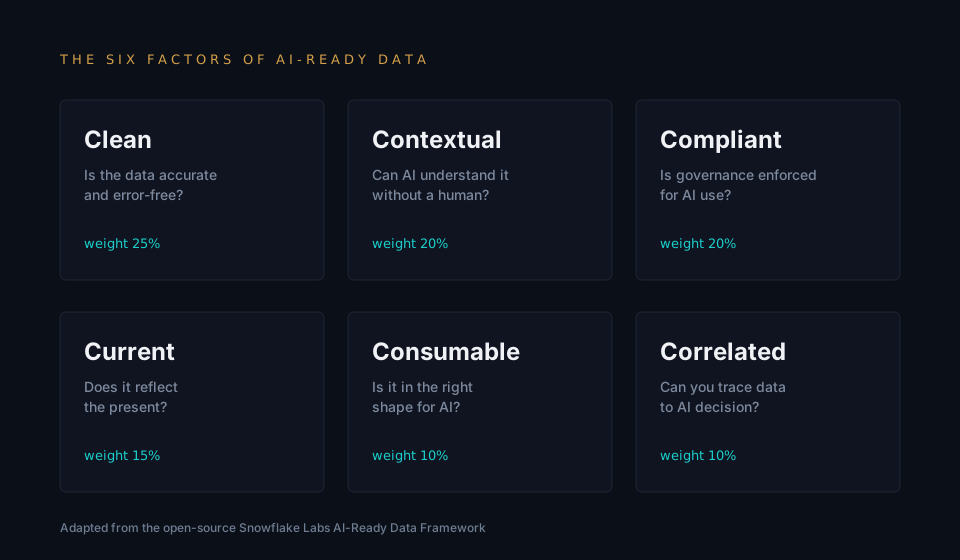
This is why the six factors MortarIQ scores (Clean, Current, Contextual, Compliant, Correlated, Consumable) read like governance rather than quality. They are the checklist of what a consumer with no context needs, and the twelve-check version of it can be run by hand from any warehouse catalog.
Which to measure first, and why it is not close
Measure readiness first. Not because it matters more in the abstract, but because of the economics of the two measurements. Quality measurement requires row access, pipeline integration, and profiling time, all spent per table. Readiness is one metadata scan: minutes, no row access, whole estate. And the findings it surfaces (unmasked PII, dead sources, an undocumented corpus) are the ones that surface on integration day, before value-level errors ever get their chance to matter.
There is also a sequencing argument. Quality tooling itself depends on readiness: dbt tests need to know which table is canonical, observability needs freshness expectations to alert against, and every quality initiative scoped as “the whole warehouse” dies of it. Repair the structure, then aim the quality tools at the tables that survived. The remediation order post covers that sequence in detail.
Get your readiness score.
Connect read-only credentials and see your score and biggest blocker in minutes. Metadata only. Starts free.
Run the free scanThe honest boundary
The border runs both ways. A readiness score of 90 says nothing about whether your revenue numbers are right, and MortarIQ will never claim it does; verifying values requires reading them, and the scan does not. Equally, a wall of green dbt tests says nothing about whether a retrieval pipeline can safely use the estate those tests protect. Neither score substitutes for the other. The mistake worth naming is only ever in one direction, though: teams that measure quality carefully and assume readiness comes with it. It does not, it fails silently, and it is the cheaper of the two to find out about.
Frequently asked questions
What is the difference between AI readiness and data quality?
Data quality measures whether values are correct: no nulls where there should be none, no duplicates, numbers in range, rows that reconcile. AI readiness measures whether a consumer with no tribal knowledge can find, understand, trust, and safely use the data: documentation, freshness expectations, declared relationships, masking on personal data, consistent structure. Quality is a property of values and needs row access to verify; readiness is a property of structure and governance and is measurable from metadata.
Does MortarIQ replace dbt tests or data observability tools?
No, and it is not trying to. dbt tests, Great Expectations, and observability platforms verify values and detect anomalies in them, which requires reading data. MortarIQ measures the structural and governance layer those tools sit on, from metadata alone. They are complementary: readiness tells you whether the estate is usable by an AI workload at all; quality tools tell you whether what flows through it is right.
Can data quality be high while AI readiness is low?
Easily, and it is the shape we expect to see most often. A warehouse maintained by a careful team can have immaculate values, passing tests, reconciled totals, and still be undocumented, untagged, and structurally tribal, because the team's shared knowledge papered over every gap. The values are right; nothing about the warehouse says what they mean. Humans cope with that. An AI workload does not.
Which should a team measure first?
Readiness, for a practical reason: it is measurable this afternoon. A metadata-only scan needs no row access, no pipeline integration, and no weeks of profiling, and its findings (unmasked PII, stale sources, undocumented corpus tables) are the ones that stall AI projects at integration. Quality measurement is deeper work, and it is better spent on an estate whose structure has already been repaired.
Curious what the readiness layer looks like when it is scored? Read a sample readiness report built entirely from metadata.